AI and Instant Soup
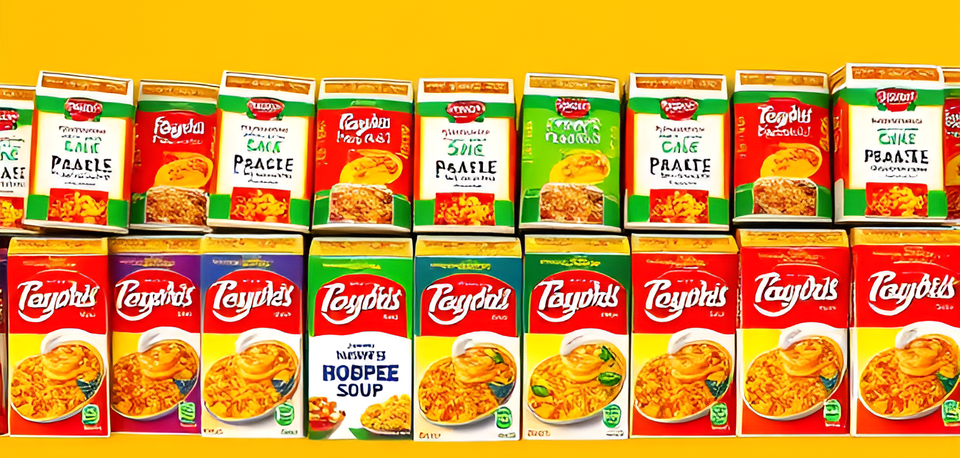
I love metaphors for thinking about and discussing complex topics. I have been thinking about the issues in the UX sector with my pencil/scrivener/author metaphor. I find AI as plastic as a great metaphor for current AI usage.
My friend Eren Çamlıkaya used erasing time as a metaphor for AI:
The internet was revolutionary because it erased geography or “space” as a barrier to knowledge. Anyone, anywhere, can access the same information. AI now erases “time” as a barrier. What once took years of experience is now achievable by juniors almost instantly through intelligent collaboration with LLMs and automation. Leveling experience will then bring the entire workforce on the table for companies to pick from. Who do you think the winners will be? (LinkedIn post)
I found myself nodding, with half agreement and a twitching eye. My eye twitched because the type of time erasure he speaks about reminded me of how instant soups "save" time in the kitchen.
Hence, this is my comparison of AI with instant soup.
Instant soup looks like it cuts down meal time, but an instant tomato soup is not a tomato soup. It is a mixture that looks like, flows like, and in some cases, tastes like tomato soup. Instant soup companies pay a lot of money to make people believe that this is the future of cooking and we are about to experience a culinary revolution that humankind have never seen before.
A lot of instant soups are mispackaged. You buy a package of cream of mushroom, but in addition to mushroom, you find two slivers of anchovies in the package. You buy a halal tarhana soup, but it comes with two tiny bits of bacon. Those who know what halal is gets rightfully mad about this. Instant soup companies write reports about how the buyers can do some work to reduce the likelihood that their purchases are actually what they purchase. People don't buy into this. Then, instant soup companies write articles that offer mathematical proof that instant soups may contain other things that no one could anticipate. Just to be sure, they write on the packages: "Instant soup may include other ingredients. Always check before you eat." In doing that, they relieve themselves of the responsibility to ship the right thing.
These companies actually have safety teams that should be taking care of these issues. Some teams actually find the bacon in the halal tarhana soup. But the product team decides to ship it anyway. Some companies hire starving employees in conflict zones in Africa, feed them whatever comes out of their production line, and if one of these employees gets sick, they realize that there is a problem.
Instant soup isn't providing any nutrition, and instant soup companies know this. So they hire nutritionists, not to enhance the nutritional value of the product, but to lead PR campaigns to argue that instant soup is part of a balanced diet.
The convenience of instant soup appeals to so many people. Those who have no idea of what a soup is start making enormous quantities overnight, every day. They justify paying for these excess quantities that no one will consume by saying that this is the price of learning. These soups are terrible by the way, because not even the instant soup companies know the right ratio for preparing an excellent soup every time.
Seeing this frenzy and mistaking it as an opportunity, hobbyists grab kilograms of different flavors of instant soup and exhaustively try mixing them to arrive at the perfect soup made with high quality stock. In doing that, they spend so much time, effort, and money that learning how to make soup from absolute scratch would have cost less and taken less time.
After making their third package of instant soup, Web3 experts decide to relabel themselves as instant soup experts (300k Followers). They write elaborate posts about how those who still make stock from bones and vegetables will be unemployed in a few years. None of these people have even boiled an egg in their lives.
Inspired by the loud voices in the IS community, cafeterias and commercial kitchens want to be the leaders in instant soup. Business owners of some of these establishments, not the chefs of these establishments, send company-wide emails announcing that they will be IS-first from that point on. They also fire all their prep cooks because IS is going to accelerate the way they do business.
The novice soupers who can cook only 2-3 soups start doubting their cooking skills because they never thought that a package of dust would replace a nourishing bowl of soup. Experienced soupers carry on. The new-soupers proudly, loudly say that the age of IS is here. The novice soupers give in because they don't want to be left behind in the age of IS.
Seeing commercial kitchens and cafeterias, all adjacent sectors try to embrace IS, albeit without understanding what it is. TV anchors start covering the health benefits of instant soup. Barbers start sprinkling instant soup on their clients' hair. Teachers bring instant soup to the class and mix it into kids' water bottles. Chai vendors on the street sprinkle like 3 specks of instant soup on their chai and sell it at a 50% markup because it is IS-powered. Or IS-powdered, whatever...
Instant soup manufacturers start offering unlimited instant soup to culinary schools and food regulatory bodies, in addition to cash and PR, to make instant soup a central part of cooking training and regulations. Instead of teaching their kids how to cook, parents buy their kids instant soup kits. The kid who mixes their first package with hot water claims themselves to be a mixing engineer.
(I wanted to write something about the kids who took their lives. I just couldn't.)
Unfortunately, cooks and chefs follow. Cooks who are not quite good at cooking discover that they can add instant soup to their soups to make them taste better, saving them years of practice that they should have done. Some cooks take pride in not using a pot at all while making soup. Some cooks declare themselves to be IS chefs, and start to write cookbooks about IS-recipes. They do it in the open, not because they care about the community, but because they themselves have no idea where this is going. But hey, who doesn't want to be a book author in the most exciting field of human technological history?
Meanwhile, experienced chefs who know when to use dehydrated stock and by how much, keep dishing excellent meals. Experienced homecooks keep adding only little bits of instant bouillon cubes to dishes for a subtle lift in taste. Large event kitchens plan their purchases for instant bases, but they do not try to incorporate chicken stock into tiramisu. They get scolded for blocking innovation.
Fifty years ago, Japanese scientists invented the foundations of dehydrated stock bases. Three years ago, one American company wanted everyone to believe that they have invented instant soup. This year, a Chinese company came along, bought a lot of US instant soup powder, stretched it by adding maltodextrin and MSG to it, and shook the world market due to reduced cost per unit.
Instead of handling criticism about why their instant soups suck, instant soup companies claim they're just about to discover general instant food, so people should be patient.
People who know what tomato soup tastes like detect instant tomato soup instantly. When they complain about it, they are called luddites. Instant soup companies issue statements about how the next iteration will pass the Le Cordon Bleu (a famous cooking school) final exam. And oh by the way, we are expected to believe that instant soup democratizes learning, that IS is our cooking companion, and that it's sentient.
What do you think about this metaphor? I would love to hear your take on LinkedIn.